

In the motorcycle parts market, the difference between a high-performance part and a low-quality one is sometimes invisible to the naked eye… until the engine stops. For a professional dealer or mechanic, knowing how to identify a defective component isn't just a matter of aesthetics; it's a matter of safety and reputation.
Here we share the key points to detect spare parts that do not meet industry standards, before installing them in the machine.
1. Surface finish: What the metal reveals
The technical precision is evident in the texture. Certified industrial processes (like those of the suppliers of Honda or Yamaha) leave clear traces of excellence.
- Warning signs: Presence of “burrs” (excess metal on the edges), porosity in the casting or marks from rough tools.
- The quality test: A high-end replacement part, like an ESCO pistonIt features a uniform polished finish or precise CNC machining. If you see irregularities on the contact surfaces, it's a sign that the mold or machine used is out of tolerance.
2. The weight and density of the material
Although we don't always have a scale handy, the "feeling" of the weight says a lot about the alloy used.
- The Risk: Many low-cost manufacturers use recycled or high-impurity alloys to reduce costs. This results in lighter but much more brittle parts.
- The Tip: Compare the weight of the new part with the original part you just removed. A significant weight difference usually indicates a lower metal density, which will lead to fatigue failure under extreme heat conditions.
3. Heat treatments and coatings
High-performance parts are not just raw metal; they carry science on their surface.
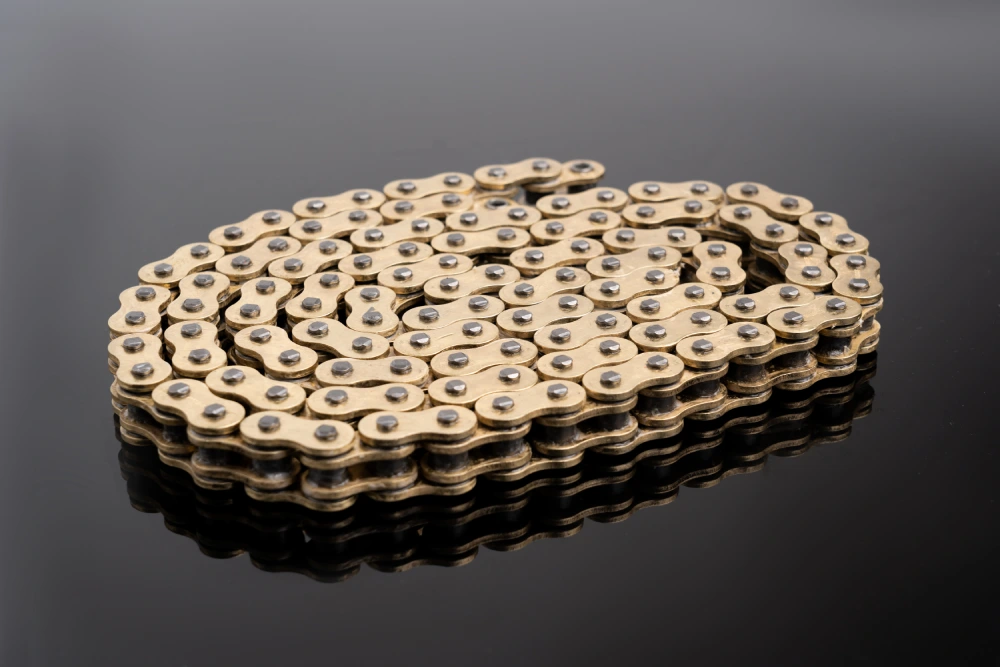
- Chains and Gears: Look for a uniform color, which indicates proper heat treatment (such as cementation). If the color is "stained" or peels like paint, the treatment is superficial, and the piece will stretch or lose its teeth within a few miles.
- Brake Discs: A quality stainless steel disc should have a perfectly circular grinding pattern. If the steel appears dull or "blue" from the factory, the carbon composition is not adequate for heat dissipation.
Expert note: Los componentes ESCO Pistons They undergo superior finishing processes that not only improve the aesthetics, but also guarantee resistance to oxidation and chemical wear.
4. Packaging and traceability
Quality starts in the box. A company that invests in the development of an OEM component also invests in protecting it.
- Identify the fraud: Generic packaging, without technical information, without batch codes or with poor translations are often signs of "ghost" factories.
- The ESCO guarantee: Como socios estratégicos, nuestro apoyo en branding y packaging Ensure that each product is traceable, has clear specifications, and reaches the end customer in factory condition.
5. Certifications: The invisible endorsement
Don't settle for the piece just "fitting." Ask about process certifications.
- ISO 9001: It guarantees that the factory has controlled processes.
- OEM Certification: It's the gold standard. It means the manufacturer supplies directly to global assembly plants.